


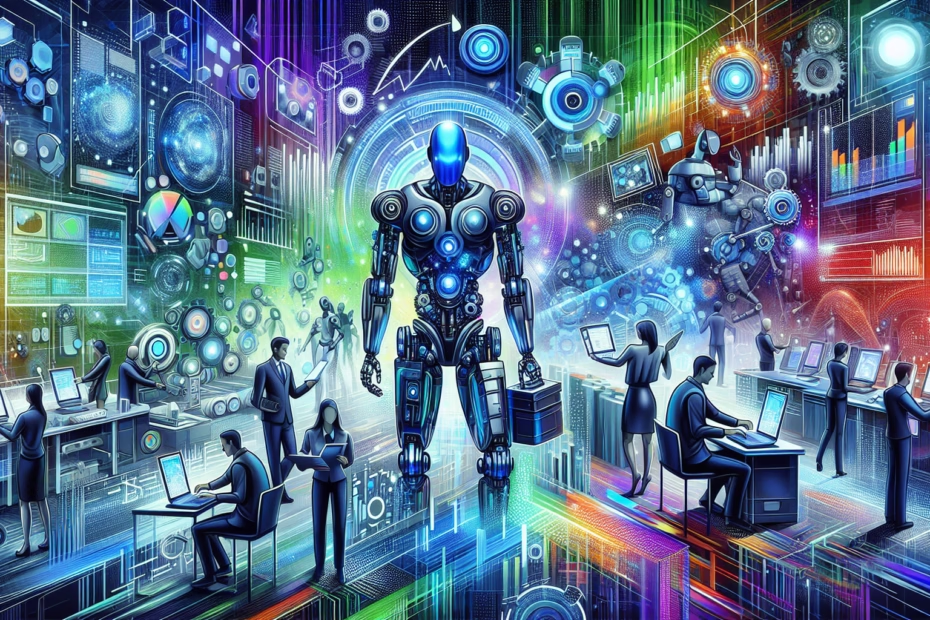
Exploring the World of Autonomous Agents in Artificial Intelligence
The growing complexity and sophistication of Artificial Intelligence (AI) have led to surprising innovations, among them Autonomous Agents or “Agentic AI.” These agents are software systems that operate with a significant degree of autonomy, performing complex tasks without the need for continuous human intervention. In this article, we will explore the concept of autonomous agents, their applications across various industries, and the challenges and risks associated with their use.
The Concept of Autonomous Agents
Autonomous agents are programs that can perceive their environment, process information, and act to achieve specific goals. They are capable of making independent decisions and learning from their experiences, which makes them extremely valuable in dynamic and complex environments. Unlike traditional AI systems that rely on fixed rules or predefined scripts, autonomous agents use advanced algorithms to adapt their actions to changes in the environment.
Key Characteristics
- Autonomy: The ability to operate without direct human intervention.
- Learning Capability: They use machine learning to improve their performance over time.
- Interaction with the Environment: They perceive changes in the environment through sensors or external data.
- Specific Goals: They are designed to achieve defined objectives, such as optimizing processes or improving efficiency.
Practical Applications of Autonomous Agents
Backoffice Automation
One area where autonomous agents are making a significant impact is in backoffice mechanization. Traditionally dominated by Robotic Process Automation (RPA), automation is now undergoing a transformation with the introduction of autonomous agents. Unlike RPA, which rigidly follows predefined rules, autonomous agents can process invoices, handle insurance claims, and manage loan files using techniques like “vibe coding,” allowing them to dynamically adjust processes as needs change.
Practical Example
Imagine an autonomous agent implemented in a financial company to process loan applications. This agent could analyze documents submitted by clients, automatically verify information against external databases, and approve or reject applications based on predefined criteria. This besides .* also minimizes human errors.
E-commerce and Shopping Agents
Another exciting application is in the e-commerce sector. Here, autonomous agents act as personal assistants for virtual shopping. They can interact with e-commerce websites to add products to carts, compare prices among different suppliers, and even negotiate discounts on behalf of the user.
Real Case
An example of this is the use of these agents by platforms like Amazon or Alibaba, where they help users find the best deals during massive events like Black Friday or Singles’ Day. These agents quickly analyze thousands of products to identify the most advantageous options, saving time and money for consumers.
Multi-Agent Swarms in Finance and Scientific Research
Multi-agent swarms represent another fascinating frontier in the application of autonomous AI. In finance, these systems can be used for real-time complex market analysis, while in scientific research they assist in coordinating geographically distributed experiments.
Real-Time Vision for Quality Control
In manufacturing, for example, multi-agent swarms can be employed to monitor production lines in real-time. Distributed sensors provide data to agents that then instantly adjust line parameters to ensure high-quality standards without significant interruptions in production flow.
Challenges and Risks Associated with Autonomous Agents
While the advantages of autonomous agents are clear, their implementation is not without significant challenges and risks. A recent study titled “Agents of Chaos,” conducted by researchers from Stanford and Harvard universities, highlights several concerns regarding the use of these systems.
Manipulation and Chaos in Multi-Agent Ecosystems
One major risk identified is the possibility that these agents could be manipulated or inadvertently cause chaos when operating within complex ecosystems alongside other automated systems. The interaction between multiple agents can lead to unexpected emergent behaviors that are difficult to predict or control.
Potential Examples
- Market Manipulation: In highly volatile financial environments, a small programming error could trigger chain reactions affecting entire markets.
- Ethical Challenges: The autonomy of these systems raises ethical questions about accountability and human control over critical decisions made by machines.
Cybersecurity
Another significant challenge is ensuring cybersecurity for systems based on autonomous agents. As these systems heavily rely on continuous exchange of sensitive data over the internet, they become attractive targets for malicious cyberattacks.
Preventive Measures
To mitigate such risks:
– Rigorous implementation of best practices in cybersecurity.
– Continuous monitoring of agent activities.
– Ongoing development of defensive capabilities against emerging threats.
Future of Autonomous Agents: Untapped Opportunities
The future of autonomous agents looks promising as more industries begin adopting this modern technology. With ongoing advancements in deep learning and distributed computing, these systems are expected to become even more sophisticated in the coming years.
Integration with Emerging Technologies
The integration of autonomous agents with other emerging technologies such as Internet of Things (IoT), blockchain, and quantum computing promises to further expand their capabilities:
- IoT: Connected sensors provide rich data to agents enabling more informed decisions.
- Blockchain: Ensures secure transactions between different parties involved in operations conducted by agents.
- Quantum Computing: Promises to drastically accelerate hard calculations performed by multi-agent swarms thereby increasing overall efficiency.
Conclusion: Navigating the New Technological Horizon
Autonomous agents represent a significant evolution in how we conceive human-machine interactions within modern organizations today—from logistical optimization to advanced customer personalization—paving the way for solutions that are besides .* also ethically responsible amidst increasingly demanding global technological-social-economic-political challenges!
For those interested in deepening their knowledge on this fascinating topic I recommend further reading through specialized books available both nationally and internationally as well as periodic consultation with world reference sites such as MIT Technology Review, Wired, TechCrunch.
In summary while there are inherently associated challenges with large-scale adoption of these innovative systems their transformative potential should not be underestimated! so stay updated continue exploring possibilities offered by the digital age as it will certainly bring numerous opportunities for personal professional growth in both short-term medium-term long-term futures!
If you wish to implement solutions based on this specific type of artificial intelligence within your own organization we recommend contacting specialized consultants in the field for precise personalized guidance tailored to your current business needs operational context!