


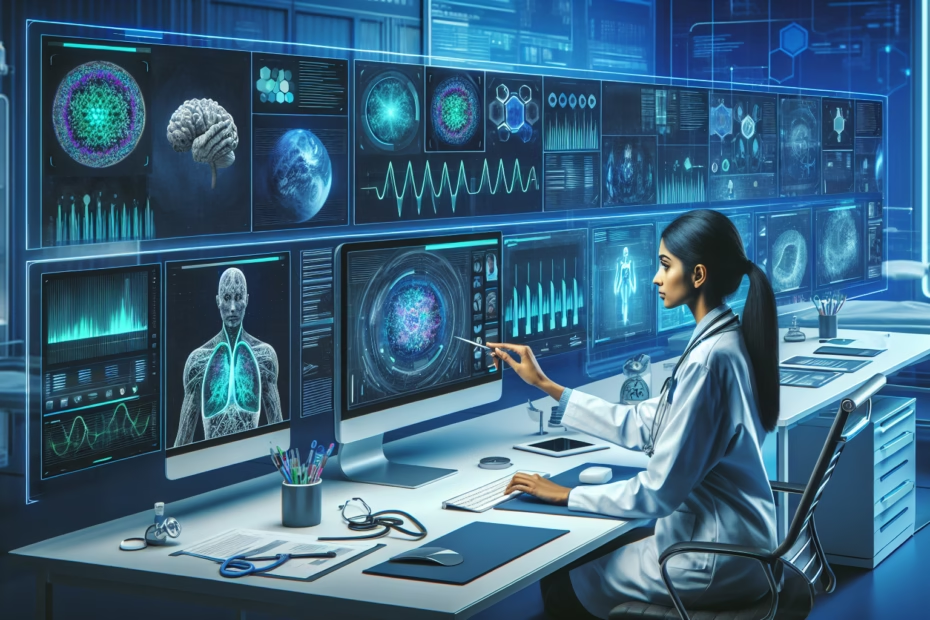
How the Partnership Between Humans and Artificial Intelligence is Revolutionizing Medical Diagnostics
The integration of Artificial Intelligence (AI) in the field of medicine has been a game changer, especially in the area of medical diagnostics. This collaboration between humans and machines has besides .* also improved the efficiency of treatments. With advancements in machine learning technologies and information analysis, healthcare professionals now have access to powerful tools that can predict diseases even before symptoms appear. In this article, we will explore how this partnership is transforming the medical landscape, discussing its advantages, challenges, and practical examples.
The Evolution of Medical Diagnostics with AI
The Role of AI in Diagnostics
Artificial intelligence has played a crucial role by providing support to doctors in interpreting large volumes of medical data. From radiological images to laboratory test results, AI systems can analyze information with a speed and accuracy that often surpasses human capabilities. For example, advanced algorithms are capable of detecting anomalies in CT or MRI images that may go unnoticed by a trained human eye.
Advantages of Human-AI Integration
-
Enhanced Accuracy: Studies show that combining human judgment with AI systems algorithms results in more accurate diagnoses than either party could achieve alone.
-
Operational Efficiency: AI can process data quickly, freeing up doctors to focus on more critical aspects of patient care.
-
Proactive Prevention: With AI’s predictive capabilities, it is possible to identify potential health risks before they manifest clinically.
-
Reduction of Human Errors: Automated analysis minimizes the risk of common human errors in complex diagnostics.
Practical Examples
A notable application of artificial intelligence is in the early diagnosis of cancer. Algorithms trained on vast datasets have demonstrated an impressive accuracy rate in the early detection of breast and lung cancers. also, platforms like IBM Watson Health are being used to analyze complex genomic data, helping oncologists personalize treatments based on the unique characteristics of a patient’s tumor.
Challenges and Ethical Considerations
Technical Challenges
Despite significant advancements, there are still considerable technical challenges in implementing artificial intelligence in medical diagnostics:
-
Data Quality: The effectiveness of AI systems heavily depends on the quality of the data used to train them. Incomplete or biased data can lead to inaccurate results.
-
Integration with Existing Systems: Integrating new technologies with legacy hospital infrastructures can be complex and costly.
Ethical Issues
The introduction of AI into medicine raises important ethical questions:
-
Data Privacy: Ensuring that sensitive patient data is kept secure is a primary concern.
-
Automated Decision-Making: To what extent should we trust machines with medical decisions? It is essential to maintain a balance between automation and human oversight.
-
Access Inequality: There is a risk that only well-funded institutions will have access to the full benefits of these technologies, widening existing inequalities within the healthcare system.
Inspiring Global Cases
United Kingdom: NHS and DeepMind
In the UK, the National Health Service (NHS) collaborated with DeepMind to develop algorithms capable of predicting acute kidney problems 48 hours before clinical symptoms appear. This innovation besides .* also reduces costs associated with late treatment.
United States: Google Health
In the United States, Google Health developed an algorithm capable of diagnosing diabetic retinopathy through automatic analysis of retinal images. This system has already been implemented in clinics in India, where there is a critical shortage of qualified ophthalmologists.
Japan: Fujifilm AI Platform
In Japan, Fujifilm developed an artificial intelligence-based platform that assists radiologists in early identification of lung diseases through detailed analysis of X-ray images.
The Future of Human-Machine Collaboration in Medicine
The future looks promising for this synergy between humans and artificial intelligence in the medical field. As technologies continue to evolve, we can expect even greater improvements in diagnostic accuracy and treatment personalization:
-
Advanced Personalized Medicine: Combining individual genetic data with AI-based predictive analyses to create personalized plans tailored to specific patient needs.
-
artificial intelligence-Powered Telemedicine: Advanced tools will enable more effective remote consultations with immediate support through automated analysis of symptoms reported by patients during online medical video conferences.
-
Innovative Medical Research: Utilizing big information to identify emerging patterns in global trends related to public health—providing valuable insights for effective prevention against future pandemics or specific regional epidemic outbreaks.
Conclusion
The partnership between humans and artificial intelligence is radically transforming medical diagnostics around the world—offering innovative solutions capable besides .* also dramatically increasing our chances for success against growing challenges we face daily within this area of vital social importance! so, it is essential that we continue investing in this promising partnership while carefully addressing all ethical implications associated with its widespread use, so ensuring better outcomes both in the short and long term!
For those interested in deepening their knowledge at this fascinating technological-medical intersection, I recommend reading “Artificial Intelligence” by Stuart Russell & Peter Norvig as well as consulting renowned online resources such as the official MIT Technology Review website MIT Technology Review where you will find regularly updated articles on the latest trends and scientific advancements related to the topic discussed here today!